TIFF 23: Origin
 0
0
 0
0
Read Time:4 Minute, 27 Second
Starting with a dramatization of the murder of Trayvon Martin and mixing in other horrors the caste systems of the world have wrought, Origin is a movie you’ll certainly need to gird your loins for if you belong to a marginalized community. It’s a stark look at caste systems and how they have impacted the world. Director Ava DuVernay has crafted a movie that is both an accounting of said systems and that is engaging on a visceral emotional level.
The film is really fascinating attempt at adapting a book and translating concepts that many may not have heard of into a narrative piece. DuVernay uses key moments in history and people to anchor the story: the aforementioned murder of Trayvon Martin, the story of August Landmesser, a German who refused to salute Hitler because he fell in love with a Jewish woman Irma Eckler, the research done by Black anthropologists Allison and Elizabeth Davis and their white counterparts Burleigh and Mary Gardner as they investigate the racial caste system in the Jim Crow-era South, and the caste system in India. If that sounds like a lot, it’s because it is. It’s quite admirable of DuVernay to attempt to blend the various plots, in a book you have hundreds if not thousands of potential pages, and she has to do it in two hours and 15 minutes. Her work as a documentarian (she directed The 13th) is evident in how she chooses some of her shots particularly as Isabel is conducting interviews and visiting locations of horror. In exhuming the historic records and people who changed history, DuVernay approaches the material with a brave sensitivity, and when you look at these bits as a high budget documentary like reenactment, less as narrative drivers, the movie takes on new shape.
Origin is also the portrait of the writer Isabel Wilkerson and the multiple tragedies that have befallen her. Aunjanue Ellis is incredible as Isabel Wilkerson and her performance is a strong anchor that guides us through the movie. Ellis is great at not only serving as the audience surrogate through history but also finding interesting ways to shed light on her character on screen. She’s got a lot of moving moments (a conversation with Audra McDonald is a highlight) but it’s the smaller more interior moments that stand out the most, especially in a narrative this sweeping.
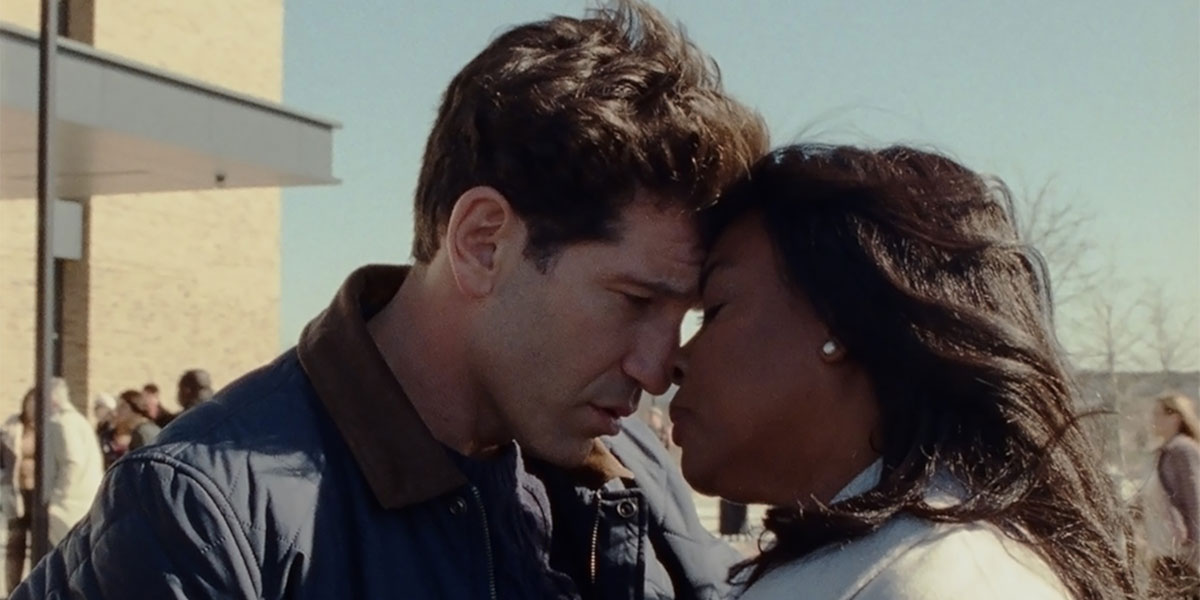
She makes it a point to address the obvious as Isabel interacts with a handyman who is wearing a MAGA hat, so it’s all the stranger that in a film where a Black woman is married to a white man there’s not more done with conversations involving them, especially as the main marketing still is of the couple. Their relationship contains a beautiful purity of spirit, but it feels like a missed opportunity in a film that is interested in exploring difficult subjects.
Origin is like a worn puzzle, the pieces may be rough, some torn and repaired with tape, but the puzzle still fits together. Particularly as the movie tangles with Isabel’s personal life, Origin seems only concerned with whether or not its central character has achieved her healing, not that we might be satisfied with the story being told. The editing of this movie must have been a monumental task given the subject matter, and while it tries, the film does have some jagged pieces that don’t fit together the best. We know most of the stories and situations recounted here are hard to tell and some have no solution, but a tighter focus on just how these moments blend together would have been nice. Whether it’s using a dramatic conversation about the Holocaust to send Isabel on a fact finding mission to learn Nazi laws were based on US segregation or the way we’re shown the ending of the main stories, the weight of all this movie needs to do does make it bend a little.
Finally, film doesn’t need to coddle audiences and shouldn’t be concerned with trigger warnings but by the end of this movie I was left wondering what all the experience had been for for me. As a Black person, my hackles were instantly raised as the opening scene went on and there’s not much in the way of hope as we continue to be subjected to the various horrors inflicted upon Black people, Jewish people, and Indian people. There’s a lovely turn of phrase at the end of the movie about us being born into a house with cracks but it’s up to us to not let it crumble and repair, but what exactly am I called to do other than bearing witness to the horrors? Even the post script on the film is focused on how successful the book was but not about what anyone in the film or who made the film would encourage folks to do. Perhaps that’s what Ava envisioned for me to have as the take away, but I felt hollowed out by Origin in a way that is very hard to describe. Much like its character Isabel Wilkerson, I will be pondering the questions and subject matter presented for a while even while wading through the unfortunate history Origin depicts.


Happy
0 %

Sad
0 %

Excited
0 %

Sleepy
0 %

Angry
0 %

Surprise
0 %